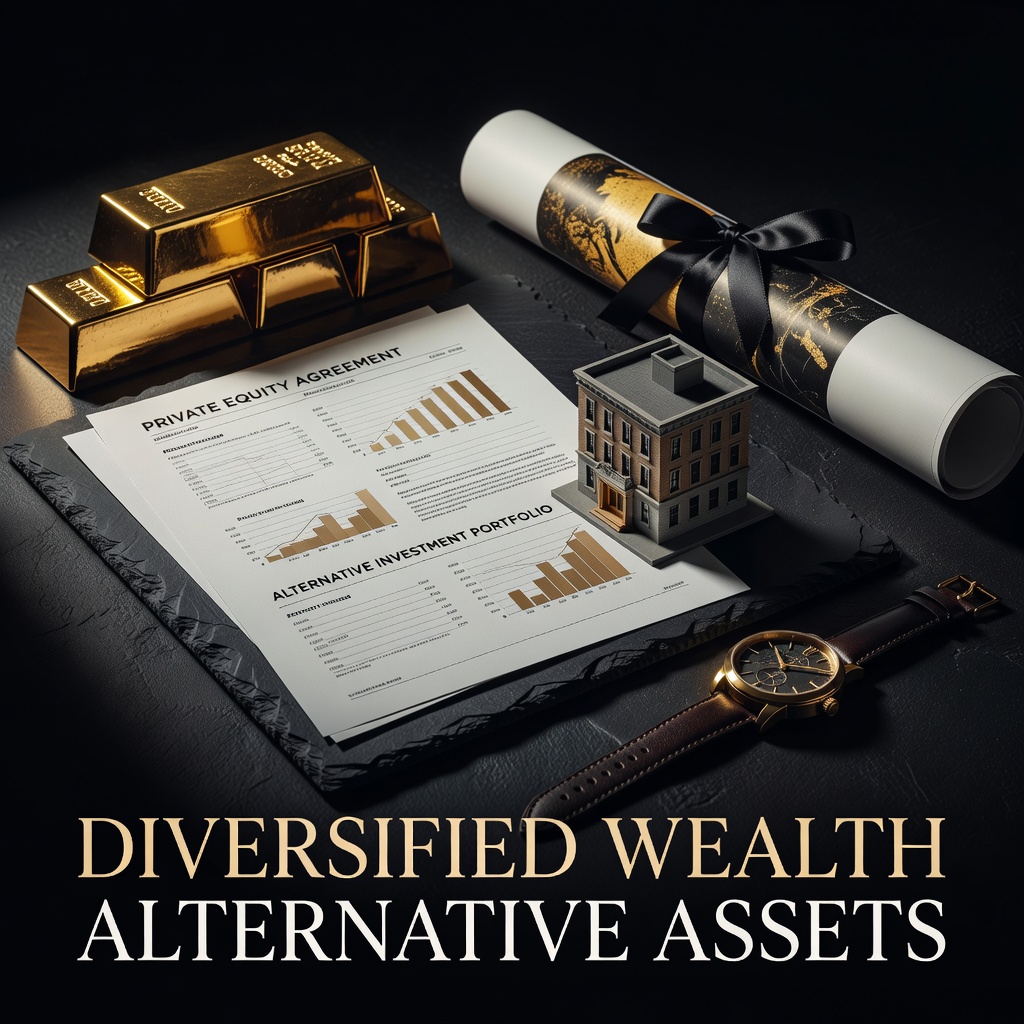
Why the Sophisticated Investor Looks Beyond Public Markets
For most of the 20th century, alternative investments were the exclusive domain of institutional investors and the ultra-wealthy. Yale's endowment, which allocated heavily to private equity, real assets, and hedge funds, consistently outperformed traditional stock-and-bond portfolios by significant margins — the so-called Yale Model demonstrating that diversification across asset classes with low correlation to public markets produces superior risk-adjusted returns over long periods.
That exclusivity is eroding. SEC regulation changes, the proliferation of crowdfunding platforms, and the growth of the accredited investor pool have made meaningful alternative investment exposure accessible to a much larger population of high earners. For those earning above $200,000 annually or with a net worth above $1M (excluding primary residence), the universe of available investments has expanded dramatically.
The strategic case for alternatives is not about chasing returns. It is about reducing correlation to public market volatility, accessing return premiums that public markets don't offer, and building a more resilient overall portfolio.
The Alternative Investment Landscape
Private Equity and Venture Capital
Private equity encompasses investments in companies not listed on public exchanges — from small business acquisitions and growth-stage companies to large leveraged buyouts. The private equity premium (the return advantage over public markets) has historically been 3-5% annually over comparable public equity, though this varies significantly by manager quality and vintage year.
Access points for individual accredited investors include: direct investment in private businesses, participation in PE-focused funds of funds, interval funds (semi-liquid private equity vehicles), and platforms like Moonfare or iCapital that offer feeder funds into institutional-quality PE managers. Minimum investments typically range from $10,000 to $250,000 depending on the vehicle.
Venture capital offers higher potential returns alongside higher risk and longer lock-up periods. For the investor interested in VC exposure, angel investing (direct early-stage investment) and AngelList syndicates provide accessible entry points. The key discipline: diversification across 20-30+ investments over multiple years dramatically reduces the binary risk of any single bet.
Private Credit and Direct Lending
Private credit — loans made directly to businesses outside of the banking system — has grown dramatically since the 2008 financial crisis as banks retreated from middle-market lending. Private credit funds provide senior secured loans to established businesses at floating rates, typically generating 8-12% yields in the current environment with meaningful downside protection from collateral and covenants.
The appeal for high earners: income generation with lower correlation to public equity markets, typically secured by business assets, with returns that float with interest rates. Platforms like Percent, Yieldstreet, and direct private credit funds provide access. Risk considerations include illiquidity, credit risk, and manager selection.
Real Assets: Commodities, Farmland, and Timberland
Real assets — physical resources with intrinsic value — provide inflation protection that financial assets cannot. When inflation rises, the value of real assets typically rises with it. The categories most accessible to individual investors:
- Farmland: AcreTrader and FarmTogether provide fractional ownership of US farmland — historically the most stable real asset class, with returns driven by crop income and long-term land appreciation. Low correlation to equity markets, genuine inflation protection.
- Timberland: Forests as an asset class grow biologically, providing a return floor independent of market conditions. Weyerhaeuser and Potlatch (REITs) provide liquid exposure; direct timberland funds provide more pure-play access.
- Commodities: Broad commodity exposure (via PDBC or similar ETFs) or specific commodity plays (gold, oil, agricultural) provide portfolio diversification and inflation hedging. Gold specifically has served as monetary insurance for thousands of years.
Structured Notes and Alternatives to Bonds
For the income-seeking investor uncomfortable with full equity risk, structured products offer customized risk-return profiles — typically providing downside buffers in exchange for capping upside. Buffer ETFs (from issuers like Innovator and First Trust) provide defined outcome investing with specific downside protection levels over set periods, with no lock-up or accreditation requirement.
Collectibles and Passion Investments
Art, wine, classic cars, watches, and sports cards have each produced compelling returns over multi-decade periods for knowledgeable investors. The critical qualifier: knowledge. These markets are opaque, illiquid, and require domain expertise to navigate. For the passionate collector who would own these assets regardless, the return potential is genuine upside. As pure financial investments without domain knowledge, they are treacherous.
Platforms like Masterworks (art), Vinovest (wine), and Rally (collectibles) have made fractional ownership accessible with lower minimums, though they introduce platform risk and fee structures that require careful evaluation.
Sizing and Portfolio Integration
The Yale endowment model allocates approximately 70% to alternatives. This is not a template for individual investors — institutional endowments have 10+ year investment horizons, professional teams, and no liquidity needs. A more appropriate framework for the high-earning individual investor: treat alternatives as a 10-25% allocation within an overall portfolio, deployed gradually over 3-5 years to avoid vintage year concentration risk.
The sequencing that produces the best outcomes: core index fund portfolio first, real estate second, then alternatives as a third layer once the foundation is established. Alternative investments reward patience, diversification, and a learning orientation more than any other category. They punish overconfidence and under-due-diligence more harshly as well.
The Due Diligence Non-Negotiables
Before committing capital to any alternative investment, these questions require honest answers: What is the manager's actual track record across full market cycles? What is the liquidity profile and lock-up period? What are the total fees (management fee, carried interest, platform fees) and how do they impact net returns? What happens in a stress scenario? What is the structural protection (senior vs. subordinated position, collateral, covenants)? These are not optional questions. They are the difference between sophisticated investing and expensive learning.
Your Next Chapter Starts Now
Ready to optimize your body and multiply your wealth? Take our diagnostic quiz to get your personalized growth roadmap.
Start Your Transformation