Why Nutrition Changes After 35
The nutritional landscape shifts meaningfully after 35. Insulin sensitivity declines. Anabolic hormone levels drop. Muscle protein synthesis becomes less efficient. Gut diversity begins to narrow. The caloric margin for error shrinks. What you ate in your 20s and got away with now leaves a more visible mark — on your body composition, your energy, your cognitive clarity, and your long-term disease risk.
The good news: precision matters more than perfection. The 35+ body responds powerfully to well-targeted nutritional inputs. You don't need to eat less — you need to eat smarter.
The Non-Negotiable Foundation: Protein
If there is a single nutritional variable that matters most after 35, it is protein. Not because of muscle vanity — because muscle is the organ of metabolic health, immune reserve, glucose disposal, and physical independence. And after 35, maintaining and building muscle requires more dietary protein per kilogram of body weight than at any earlier life stage.
The research is clear: the minimum effective dose for muscle protein synthesis in adults over 40 is approximately 30–40g of high-quality protein per meal — higher than the 20–25g threshold for younger adults. The practical implication: most people over 40 need to significantly increase their protein intake and distribute it across 3–4 meals daily.
Target: 0.7–1.0g of protein per pound of lean body mass per day. For a 160lb person with 20% body fat, that's 90–128g daily minimum. Most people eating a standard diet are hitting 60–70g. The gap is enormous and consequential.
Best protein sources for the 35+ body:
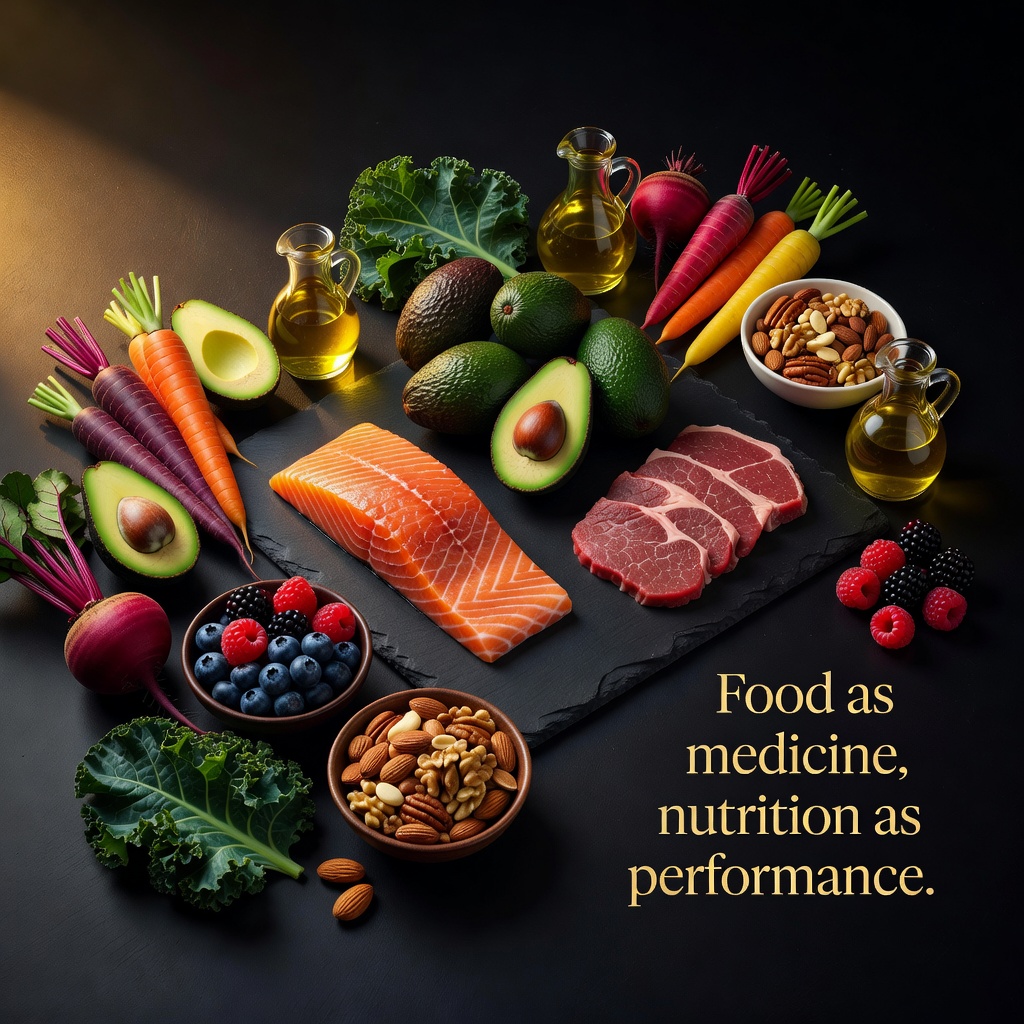
- Animal proteins: Wild salmon, grass-fed beef, pastured eggs, turkey, bison, sardines — complete amino acid profiles with high leucine content (the primary anabolic trigger)
- Dairy proteins: Greek yogurt, cottage cheese, whey protein — fast-absorbing, high leucine
- Plant proteins: Edamame, tempeh, lentils — incomplete alone but effective when combined and consumed in higher quantities
The Carbohydrate Question
Carbohydrates are not the enemy — but carbohydrate quality and timing matter significantly after 35. The key variable is the glucose and insulin response, not the macronutrient category itself.
Jessie Inchauspé's glucose research reveals a powerful and underappreciated lever: meal sequencing. Eating fiber and protein before carbohydrates in the same meal reduces the glucose spike by 30–40% on average. This simple practice — starting meals with vegetables or protein, ending with starchy carbohydrates — is one of the most impactful and effortless metabolic interventions available.
The practical framework:
- Prioritize fiber-rich, low-glycemic carbohydrates: sweet potatoes, quinoa, legumes, oats, fruits
- Minimize refined carbohydrates and added sugars — these drive insulin dysregulation without nutritional benefit
- Time carbohydrate intake around training when possible — muscles absorb glucose most efficiently post-exercise
- Use a CGM (continuous glucose monitor) for 2–4 weeks to identify your personal high-responder foods
Dietary Fat: The Misunderstood Macronutrient
Thirty years of low-fat dietary dogma have left a generation of high achievers fat-phobic in ways that actively harm their hormonal health, brain function, and satiety. Dietary fat is essential for steroid hormone synthesis (testosterone, estrogen, progesterone), fat-soluble vitamin absorption (A, D, E, K), brain structure and function (the brain is approximately 60% fat), and sustained energy between meals.
The priority is fat quality. Olive oil, avocados, fatty fish, pastured eggs, nuts, and grass-fed butter are extraordinarily nutrient-dense foods. Industrial seed oils (canola, soybean, corn, sunflower) consumed in the quantities typical of a processed-food diet represent a genuine concern due to their high omega-6 content and oxidation vulnerability.
The Inflammation Equation
Chronic low-grade inflammation is the common thread linking metabolic disease, cognitive decline, cardiovascular disease, and accelerated aging. Nutrition is one of the most powerful modulators of inflammatory status. Dr. William Li's research in Eat to Beat Disease documents the specific bioactive compounds in foods that activate the body's five defense systems — angiogenesis, stem cells, microbiome, DNA protection, and immunity.
The anti-inflammatory nutrition framework:
- Omega-3 fatty acids — fatty fish 3x+ per week, or high-quality fish oil supplement (2–3g EPA/DHA daily)
- Polyphenols — berries, dark chocolate, green tea, olive oil, colorful vegetables
- Curcumin — turmeric with black pepper (piperine increases absorption 2000%)
- Fiber — feeds beneficial gut bacteria that produce anti-inflammatory short-chain fatty acids
- Minimize — ultra-processed foods, refined seed oils, added sugars, excessive alcohol
Intermittent Fasting: Strategic, Not Religious
Time-restricted eating (TRE) compresses your daily eating window, extending the period of low insulin that enables fat burning, cellular autophagy, and metabolic repair. The evidence for metabolic benefits is strong; the evidence for longevity benefits is promising. The practical approach: a consistent 12–16 hour overnight fast is sufficient for most people to access meaningful metabolic benefits without compromising protein intake or muscle preservation.
The most important rule: break your fast with protein, not carbohydrates. This sets a metabolic tone for the rest of the day.
The Supplement Foundation
A whole-food diet is the irreducible foundation. Supplements address gaps that food alone cannot reliably fill:
- Vitamin D3 + K2: Most adults over 40 are deficient. Essential for immune function, bone health, testosterone production, and mood. Target 25-OH vitamin D levels of 50–70 ng/mL.
- Magnesium glycinate: Involved in 300+ enzymatic reactions. Deficiency is widespread and linked to poor sleep, muscle cramps, elevated blood pressure, and insulin resistance. 300–400mg before bed.
- Omega-3 (EPA/DHA): Anti-inflammatory, cardiovascular protective, cognitive function supporting. 2–3g combined EPA/DHA from a high-quality triglyceride-form fish oil.
- Creatine monohydrate: The most evidence-backed performance supplement available. Benefits extend far beyond the gym — cognitive function, cellular energy production, and muscle preservation in aging are all supported. 3–5g daily.
The Practical Framework
Nutrition doesn't need to be complicated to be effective. The framework that delivers 90% of the results with 20% of the effort:
- Hit your protein target at every meal (30–40g minimum)
- Eat vegetables at every meal — variety and volume matter
- Choose whole, minimally processed foods as the default
- Compress your eating window to 10–12 hours minimum
- Take your four core supplements consistently
- Track for 2–4 weeks with a tool like Cronometer to identify real gaps versus assumptions
Your body is not betraying you as you age. It is responding exactly as biology would predict to the inputs it has received. Change the inputs with precision and intention, and the outputs follow.
Your Next Chapter Starts Now
Ready to optimize your body and multiply your wealth? Take our diagnostic quiz to get your personalized growth roadmap.
Start Your Transformation